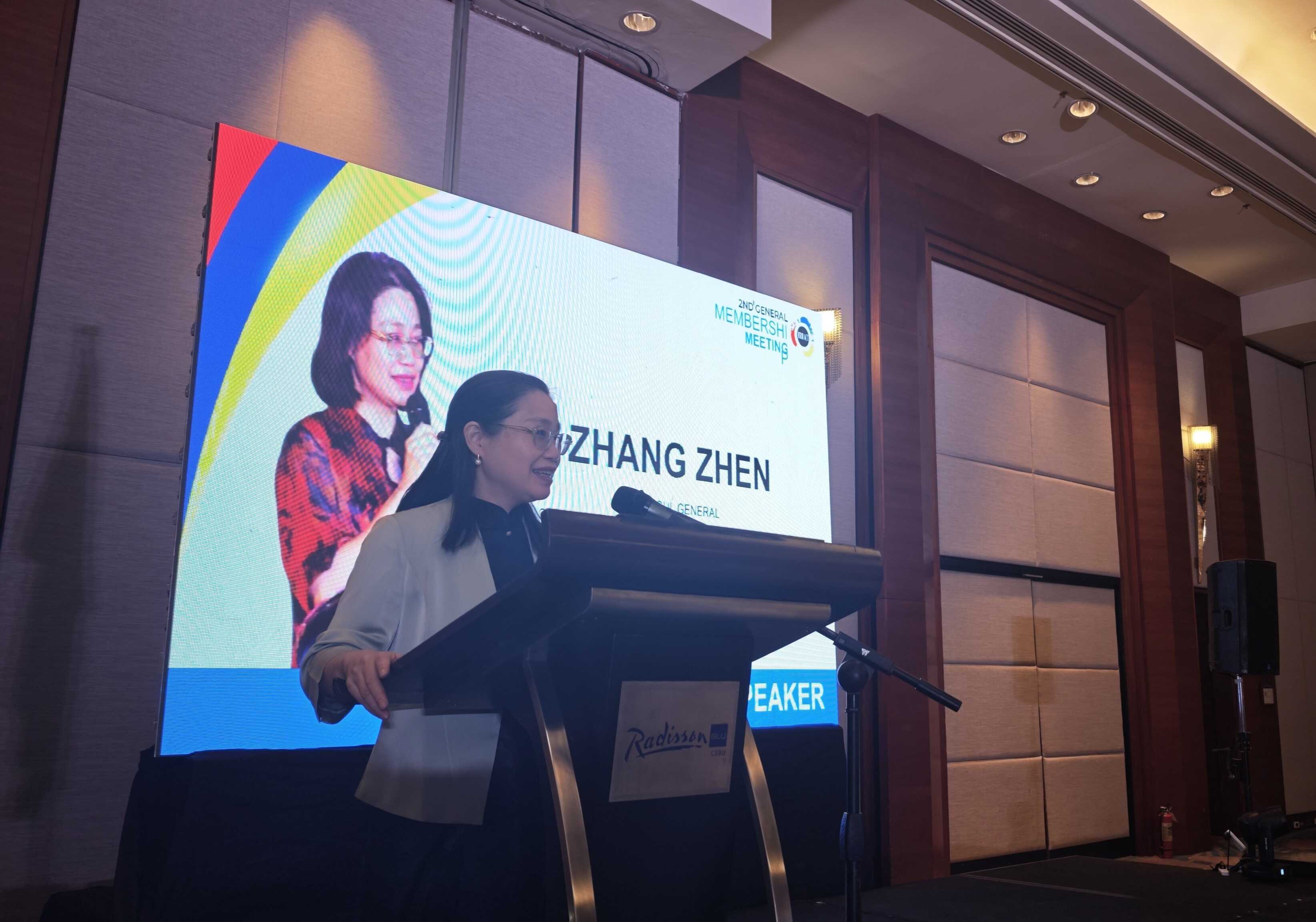
Bridging cultures: China-Philippines tourism revival hinges on positive signals
Zhang Zhen, Consul General of the Chinese Consulate in Cebu, called for a more welcoming and stable environment to revive Chinese tourist arrivals, stressing that strong bilateral relations are key to restoring the Philippines’ tourism growth.
Speaking during the General Membership Meeting of the Hotel, Resort and Restaurant Association of Cebu Inc. on March 24, 2026 under the theme “Bridging Cultures: Advancing China-Philippines Tourism Diplomacy,” Zhang underscored that attracting Chinese travelers goes beyond marketing and requires a broader sense of security, comfort, and goodwill.
“We are all aware of the disruptions of the past few years. Let me be direct with you: For Chinese tourists to return in the millions, they must feel welcomed not just by your beautiful beaches, but by the entire environment surrounding their travel decision,” Zhang said.
She pointed out that external narratives and tensions play a significant role in shaping travel decisions.
As long as anti-China forces continue to spread their narratives of hatred and confrontation, they are not just damaging political relations—they are directly harming your industry. They are scaring away Chinese tourists, she added.
Zhang emphasized that “a healthy and stable bilateral relationship is the bedrock upon which mass tourism is built,” urging stakeholders to send a clear message to Chinese travelers: “You are welcome here. This is a friend.”
Despite challenges, the Consul General noted encouraging developments in tourism cooperation. Since January, the Philippines has implemented a 14-day visa-free entry policy for Chinese tourists, while direct connectivity continues to improve, including existing flights between Cebu and Shanghai and the expected resumption of the Cebu-Quanzhou route.
“These measures allow Chinese tourists to pack their bags on a Friday and be on a beach in Cebu or Bohol by Saturday,” she said.
Zhang also outlined key factors influencing the decisions of modern Chinese travelers, particularly the growing middle-class market. These include public safety, disaster resilience, infrastructure quality, and access to Chinese-language services.
“Chinese tourists are looking for destinations where they feel genuinely secure and well-cared-for,” she said, highlighting the importance of safe streets, reliable transport, quality healthcare, and even “clean, well-maintained restrooms” as part of the overall visitor experience.
She further stressed the need for practical adjustments such as Mandarin-friendly services, translated menus, and digital payment options like Alipay and WeChat Pay, noting that “small gestures make enormous differences.”
Zhang also highlighted the shift in travel behavior, with more Chinese tourists now preferring Free Independent Travel (FIT) and personalized experiences over traditional group tours. She encouraged Cebu’s tourism stakeholders to visit China and strengthen partnerships with Chinese travel agencies, airlines, and booking platforms, as well as to gain deeper insights into Chinese consumer preferences.
Looking ahead, Zhang expressed optimism that stronger people-to-people connections and improved relations will benefit both peoples.
“Tourism builds friendships—the heart of people-to-people exchange,” she said. “Should maritime tensions ease and mutual respect take hold, progress between China and the Philippines will bring shared benefits, reaching every sector, including yours.”
She concluded with a call for collective action: “Let us work hand in hand to strengthen the bonds of friendship, promote mutual understanding, and build a brighter future for our peoples. May we have a new chapter of Chinese-Philippine tourism, a chapter where we not only recover what was lost but achieve new heights!”